

From Rabat to Washington and Beyond
Soraya Warzazi reflects on the legacy of her grandmother, Halima Embarek Warzazi, one of Morocco's first woman diplomats.

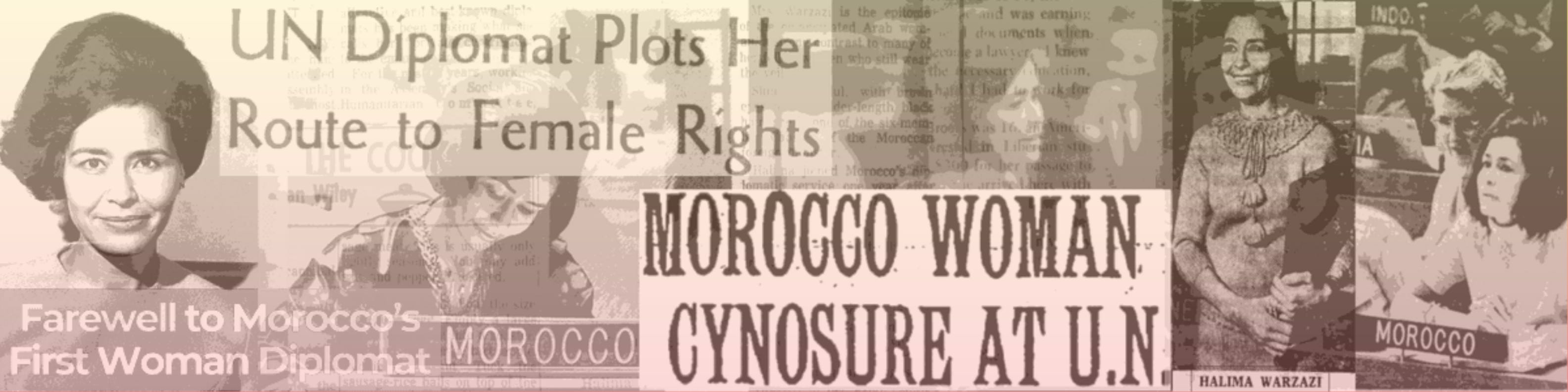
Competency with an asterisk. Too beautiful to take seriously. And yet. …
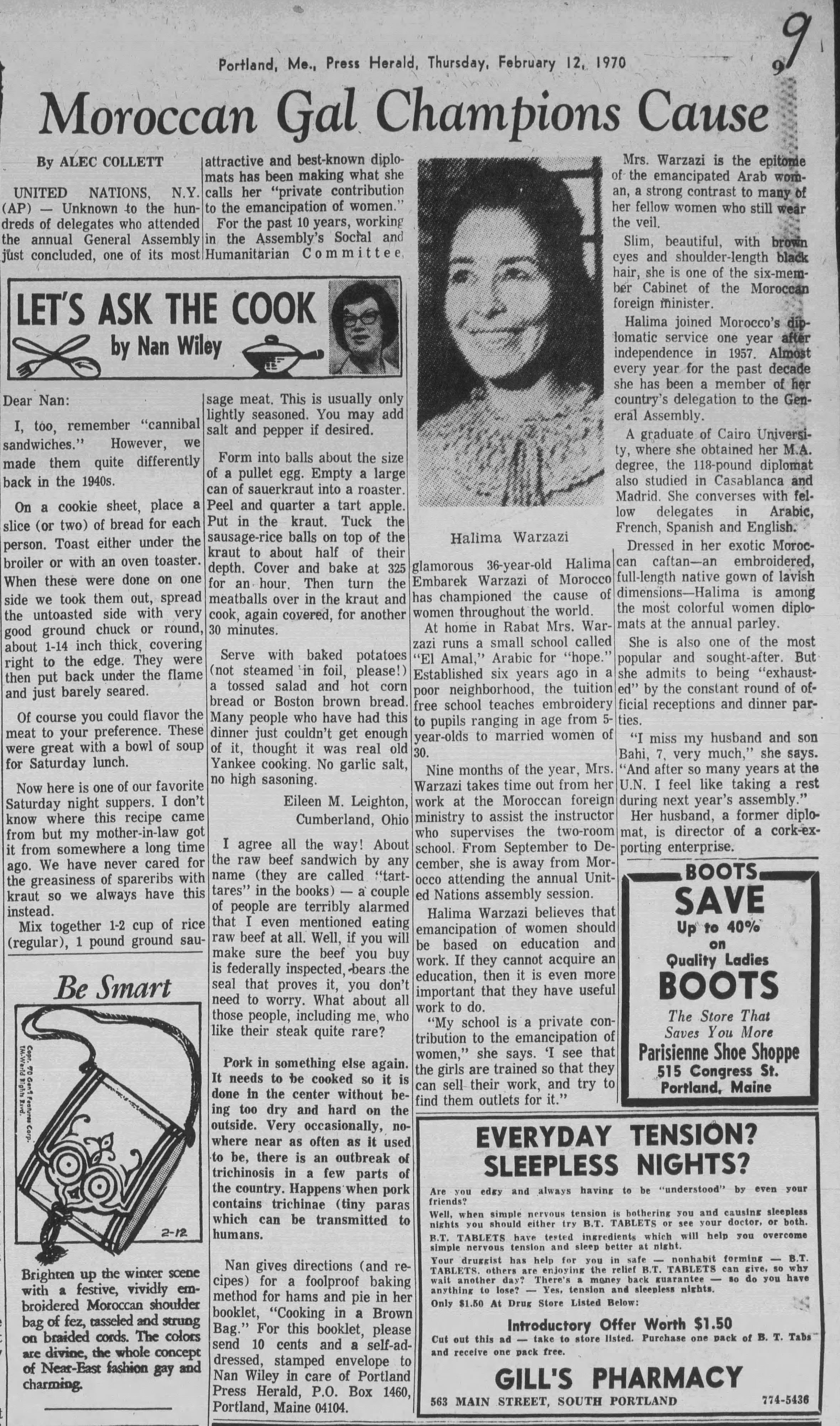
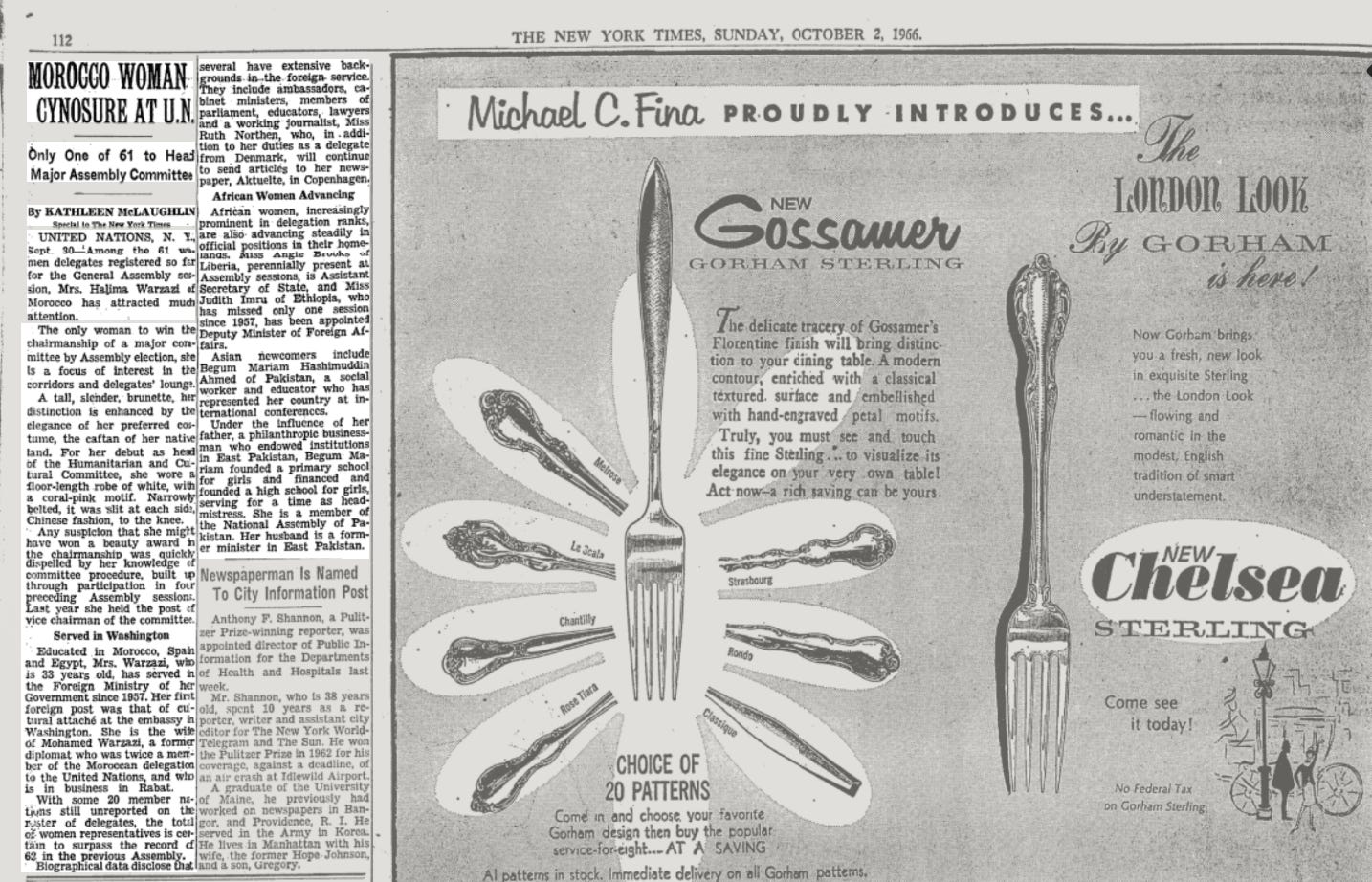
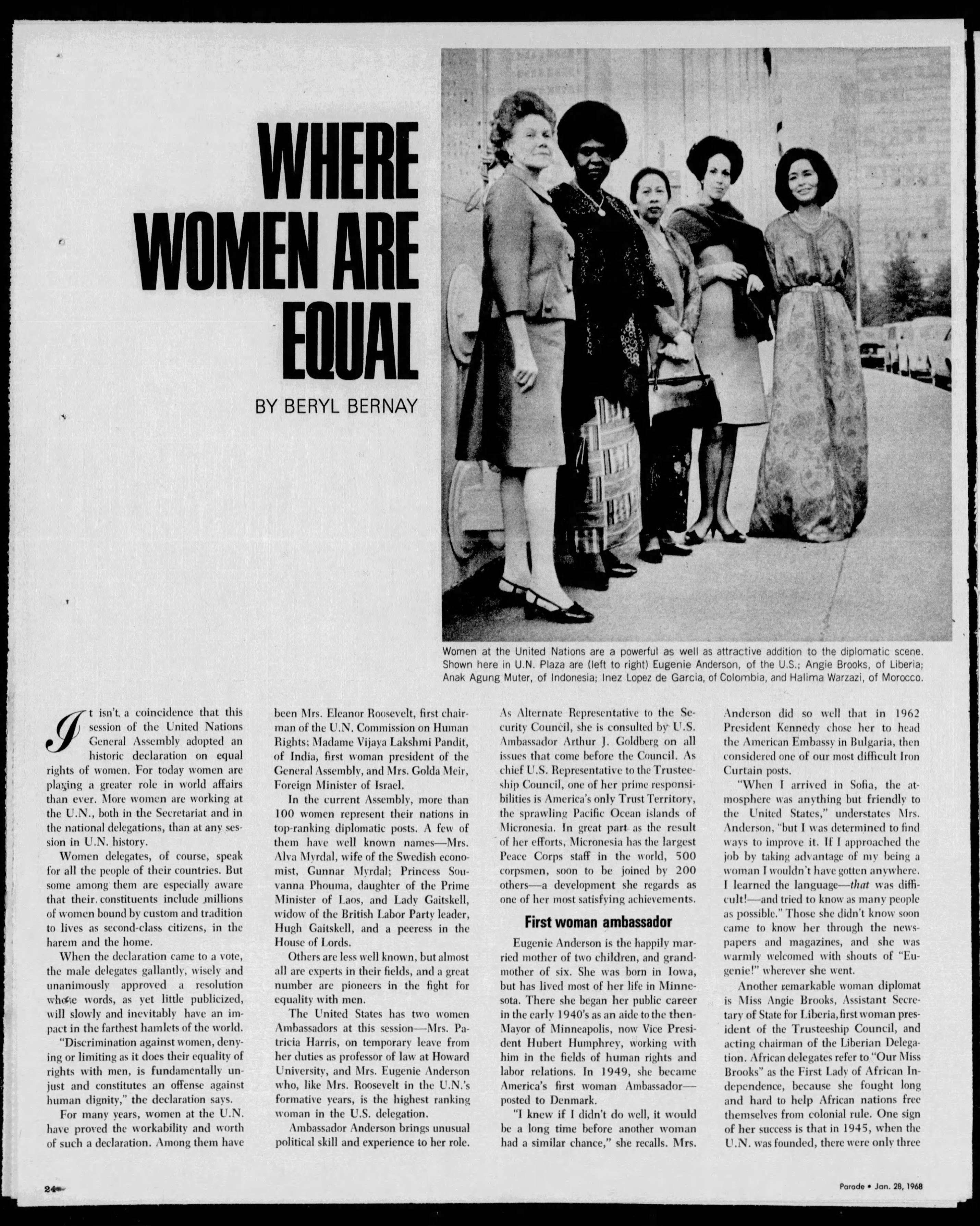
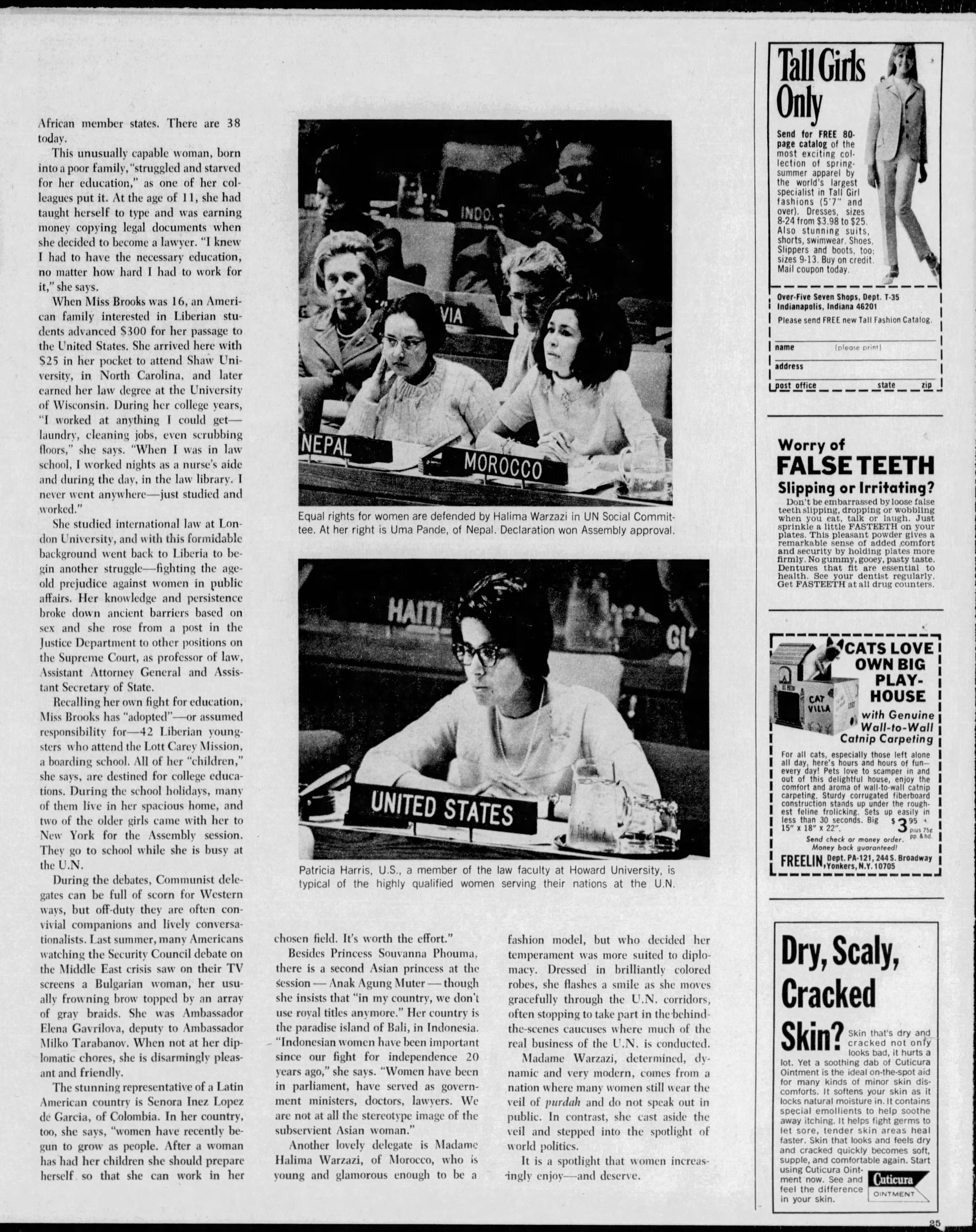
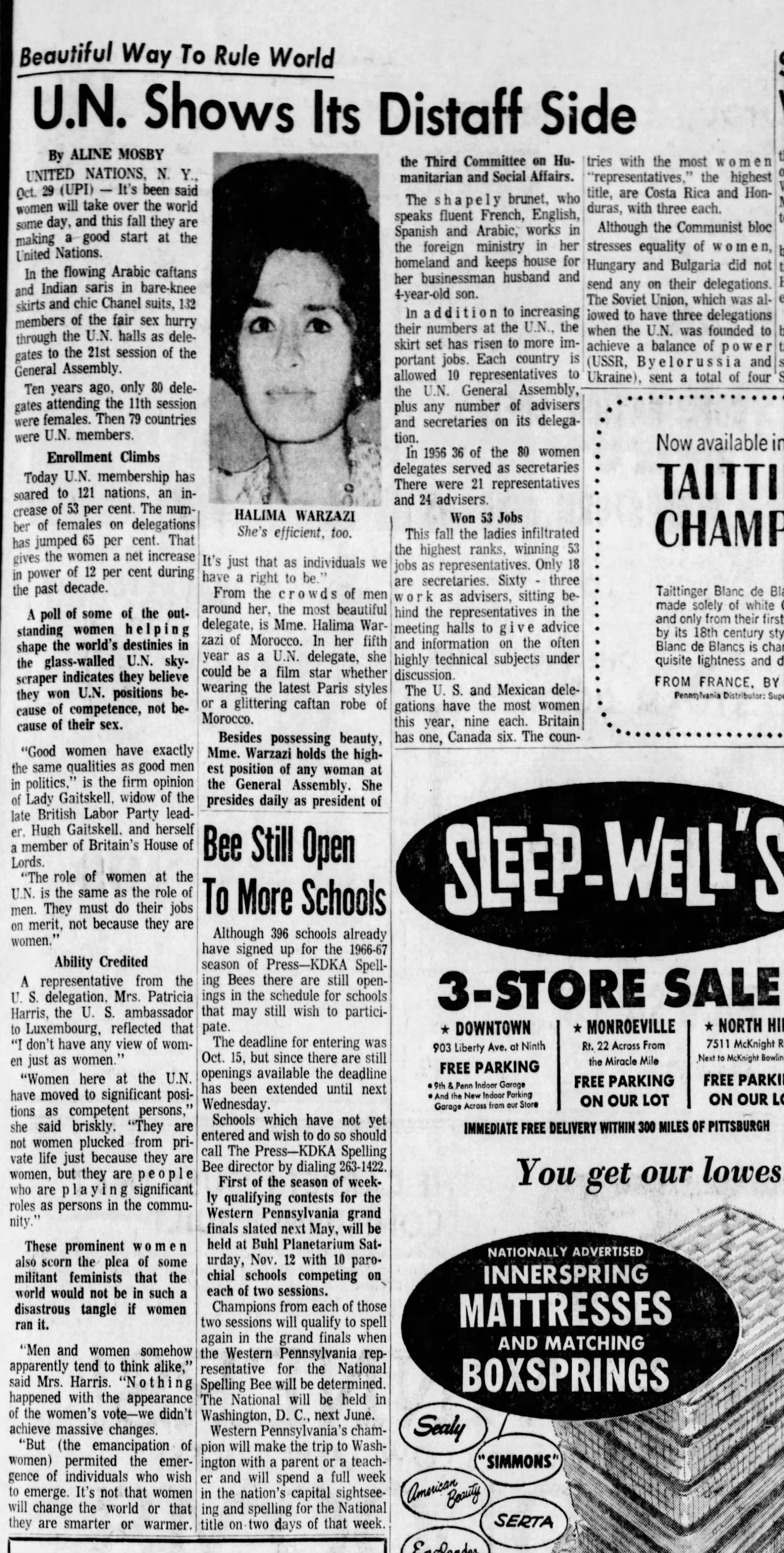
That is the undertone—if not the actual framing—around which diplomat Halima Embarek Warzazi was introduced to readers in American press coverage during her first dozen years at the United Nations. That she got any coverage at all is noteworthy, but please return to the second sentence—and then the first. Beneath the effusive praise for the “slim, beautiful,” quadrilingual diplomat, who was ”young and glamorous enough to be a fashion model” or “could be a film star,” is that asterisk. Call it what it was: skill.
Any suspicion that she might have won a beauty award in the chairmanship was quickly dispelled by her knowledge of committee procedure, built up through participation in four preceding Assembly sessions.—The New York Times wrote in a profile of the Moroccan diplomat, then 33.
The first woman to represent Morocco to the world knew she couldn’t change being objectified or under-estimated, but standing out opened doors, and for more than five decades, she walked through them. She was just that good.
Dressed in brilliantly colored robes, she flashes a smile as she moves gracefully through the U.N. corridors, often stopping to take part in the behind-the-scenes caucuses where much of the real business of the U.N. is conducted.—Beryl Bernay wrote for Parade in 1968.
I had the pleasure of speaking with Soraya Warzazi, who remembers her grandmother as being “very patient and strategic because she quickly understood the importance of navigating male-dominated spaces carefully and women’s sympathy to advance gender equality.”
Warzazi died last May at 92, and in returning to her groundbreaking legacy, it’s striking to see these through-lines and how she draped her extreme competency in cultural diplomacy. Seemingly superficial details, like wearing caftans and takchitas, invited questions. And Warzazi always had answers because she understood the power of perception, and subverting it. In a decades-long career steeped in human rights, gender equality, racial and social justice, those initial instincts are illuminating—and masterful.
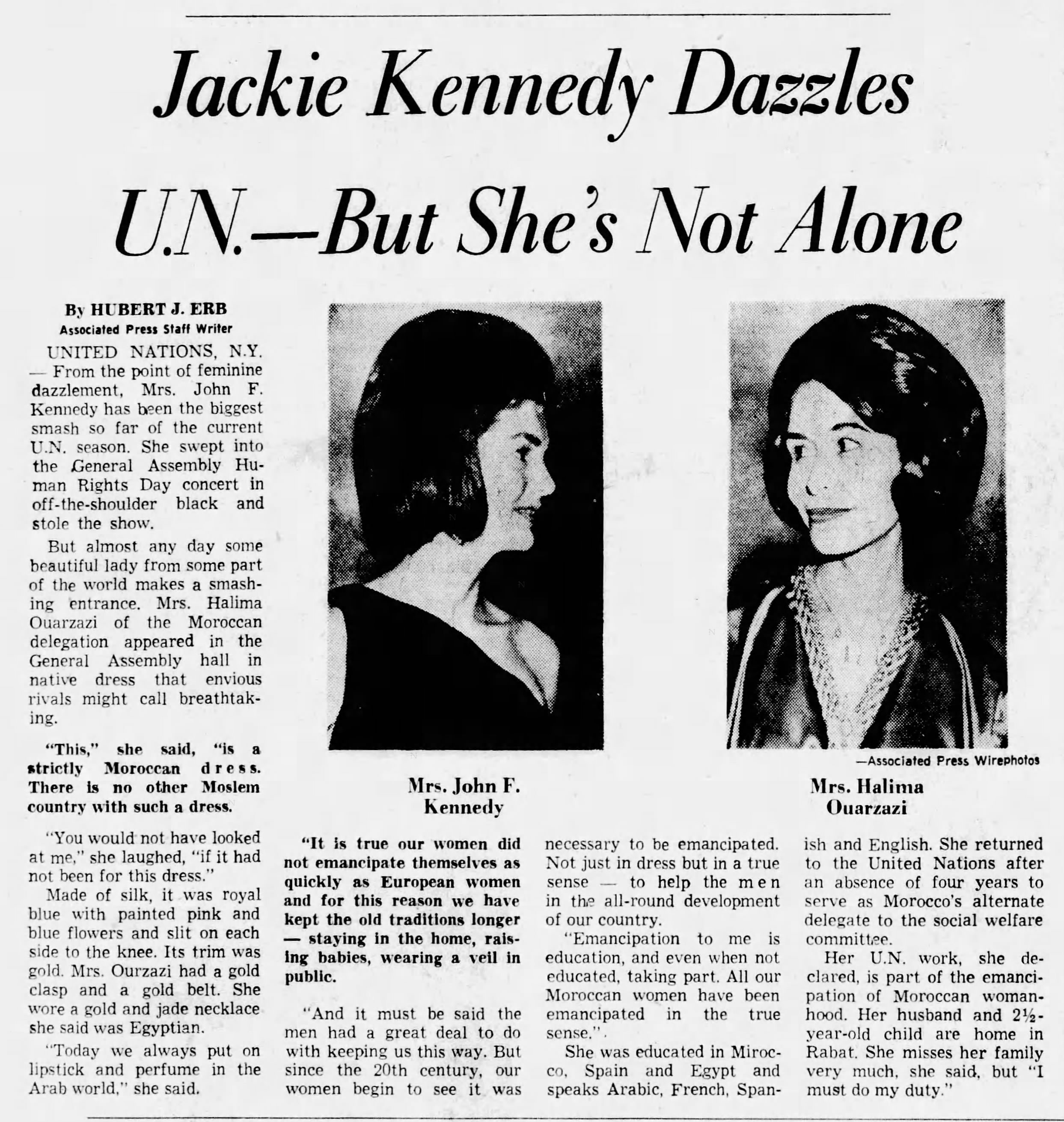
“You would not have looked at me,” she laughed, “if it had not been for this dress.”— The Associated Press wrote in 1964 under the headline: “Jackie Kennedy Dazzles at the UN, But She’s Not the Only One.”
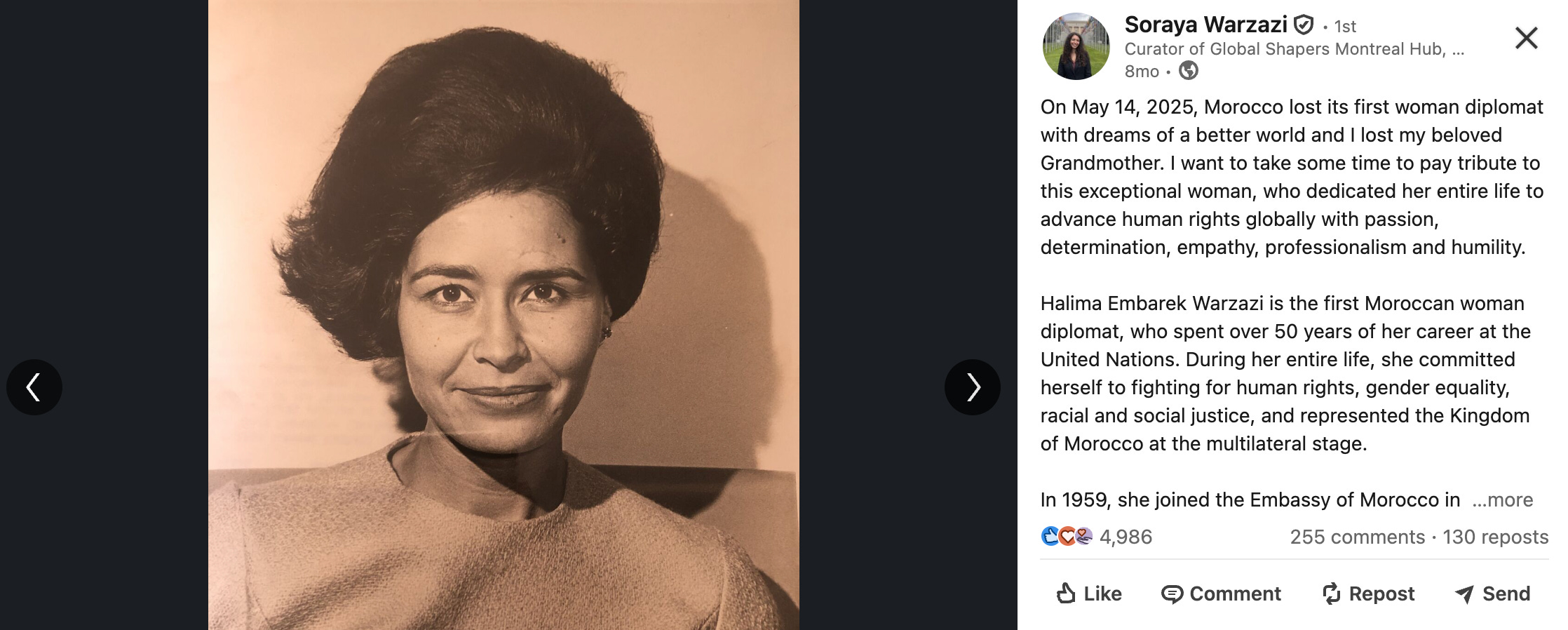
Your grandmother lived an extraordinary and purpose-driven life and, among many other accomplishments, was among the first Moroccan women to hold a diplomatic position. Can you tell us about her as both a woman in the world and the woman you knew?
Yes, definitely. She was one of the strongest and most stubborn people I have ever known because she was deeply committed to her work and to the values she carried with her. And she did everything she could to achieve her goals, whether for her career or also for her life in general. And in diplomatic circles and beyond, she was known for being that strong woman who defied and challenged patriarchy at the Ministry of Foreign Affairs and also at the United Nations.
She demonstrated to Morocco and to the world that women can fully assume political and leadership responsibilities. And I can say also that my grandmother was very patient and strategic because she quickly understood the importance of navigating male-dominated spaces carefully and women's sympathy to advance gender equality.
She also achieved so much because she dared. She dared to ask to go to the United States. She dared to ask to join the diplomatic corps in Washington and then join the United Nations. And she dared to speak up when she disagreed about something.
She spoke four languages, French, Arabic, Spanish, English. She had many friends in the UN coming from diverse countries and with diverse backgrounds, and these intercultural skills helped her to have a strong support system that enabled her to rise through the ranks and hold major responsibilities. For example, in 1966, she was the president of the Third Committee [of the General Assembly] at the age of 33.
And I can also add that as a grandmother, she was very humbled and discreet about everything she achieved throughout her career. And to be honest, on a personal note, I didn't realize everything she did and that she was this strong woman until I did my internship at the UN in 2018. I knew that she had an impressive career and was an important diplomat, but I didn't realize how much until I was welcomed by the ambassador to the United Nations and by the Diplomatic Corp.
And I quickly understood that she was not just any diplomat. She was the diplomat, the Moroccan diplomat, who had left a lasting impression on everyone around her. And as a grandmother, she was very attentive to my siblings and myself. And she was also very direct to people, very funny and always smiling and laughing. She was just special and unique.
She also achieved so much because she dared. She dared to ask to go to the United States. She dared to ask to join the diplomatic corps in Washington and then join the United Nations. And she dared to speak up when she disagreed about something.
For those who aren’t familiar with her story, can you speak to how she first joined the diplomatic corp?
After her studies in Cairo, Egypt, she decided to join the Ministry of Foreign Affairs in Morocco, in Rabat, the capital, in 1957. She was only 24 or 25, and she dreamed of a career where she would be able to travel and to meet people from different backgrounds, different horizons, and to make new friends. Her father had many acquaintances within the government, which facilitate her entry at the Ministry of Foreign Affairs.
She spent roughly two years at the Ministry of Foreign Affairs. And after a personal tragedy where she lost her fiancé at that time, who was the director of the King’s Cabinet, she asked the Minister of Interior, who was a friend of hers, if he could help her to go to Washington. And the Ministry of Interior arranged an audience with the King, and the King gave her his approval. And my grandmother joined the Diplomatic Corps in Washington in July 1959 as a cultural attaché.
In 1973, she became an expert member of the UN Special Commission against Apartheid and Racial Discrimination. She would go on to hold other powerful and meaningful positions that often focused on human rights, including the rights of women and children. What insights do you think she might have shared looking at the world as it is in this moment?
I think she would be very upset by the current state of the of the world because of the rise of hate and discrimination against marginalized communities, and especially against racialized women, women coming from different backgrounds, from the Global South countries such as Morocco, because of the rise of polarization, neocolonialism, genocides, climate disasters and the ongoing injustices that impact women especially.
I think she would be very upset by the current state of our world, but as a stubborn and determined woman, I’m convinced she would continue to hold out hope and would do everything she could to push for a better world. And I think on the other hand, she would be very proud to see that many women today continue to fight for their rights and fulfill top diplomatic positions in Morocco, for example, and in the Global South in general. And should be proud for sure that historically marginalized women are more and more agents of change, and that in the most difficult times and moments of our history, it is essential to continue our own fight.
What were the ways in which she instilled her sense of home, duty and diplomacy as part of her personal legacy?
I would say that at home, she taught us that women and girls deserve the same rights as men and boys. For example, access to education, professional opportunities, freedom and justice, and she encouraged us to challenge the prejudices that impact women and confined women to the private sphere and to trust women’s abilities.
I would also say that my grandfather shared this mindset because he strongly supported her career, and he cared for my father when she was abroad, and at that time, it was really, really rare.
She also translated her convictions into action. For example, she opened an embroidery workshop in Rabat to help marginalized women achieve their financial independence. And she instilled in us pride in our identity, culture and heritage. For example, at the UN, she perfectly embodied intersectional feminism by representing and defending Morocco’s values while wearing traditional Moroccan clothing, and she carried this same pride at home. For every reception, birthday or family gathering, for example, she honored our traditions by the way she she dressed, and she also taught us to be open minded and to listen carefully to others.
I grew up in a multicultural environment where several languages were spoken at the table—French, Arabic, Spanish—and people from different backgrounds and cultures were invited to our table. And for her, cultural diversity was a powerful way to challenge prejudice that impacts many communities, and advance gender equality, racial equity, justice and the [Sustainable Development Goals] in general.
And also, she told us that when faced with injustice, we must stand up rather than remain neutral and passive. For example, when my father was young, or even myself or my siblings, if any of us were intimated at school, she told us not to let ourselves be pushed around and to show what we were capable of. She also wanted us to take up space, meaning that we could share our ideas with respect, of course, but also with confidence and conviction. That was very, very important for her. Since we were young, she often reminded my sister and myself, especially, that we must act so that our future remains in our own hands. That was her mantra. It was very, very important for her.
That’s beautiful. And as you said, it’s so necessary to hear today. And I think what you shared about cultural diplomacy too and modeling that is so powerful. Is there anything else about your grandmother that you hold close but would like to share?
A have a funny personal story. When she arrived in Washington in July 1959, the consul of Morocco to the UN in New York was supposed to to welcome her, but unfortunately, there was a misunderstanding between the Embassy of Morocco, the permanent mission of Morocco to the UN, and the Ministry of Foreign Affairs. When she arrived, the consul was not there to greet her.
She waited for several hours and when she met him finally, she was so upset that she made a scene. The consul was very, very calm and very patient. He tried to calm her down, but apparently it was very hard. But eventually, the following month, they became very close friends, and the consul introduced her to his own friends, which helped her integration to the United States, but also to the UN. And, finally, they married each other in 1961 and they had a very happy life, and the consul was my grandfather.
That’s amazing, wow, such a good story.
Anytime they’d tell the story I’d be laughing along with my parents and my family. And my grandmother was very direct, so when she was upset, she was really upset.
I love that, and it goes to what you were saying about how she taught you to take up space.
It’s important, especially nowadays, because even if there is progress within public spaces, it’s not perfect for women, and especially for racialized women, because of intersectional issues that we are facing, it’s important to take up space and to say what justice should be. And I think that was the lesson I learned from my grandmother.
What’s in a headline—
If you’re in a reading mood—